
What is ERP?
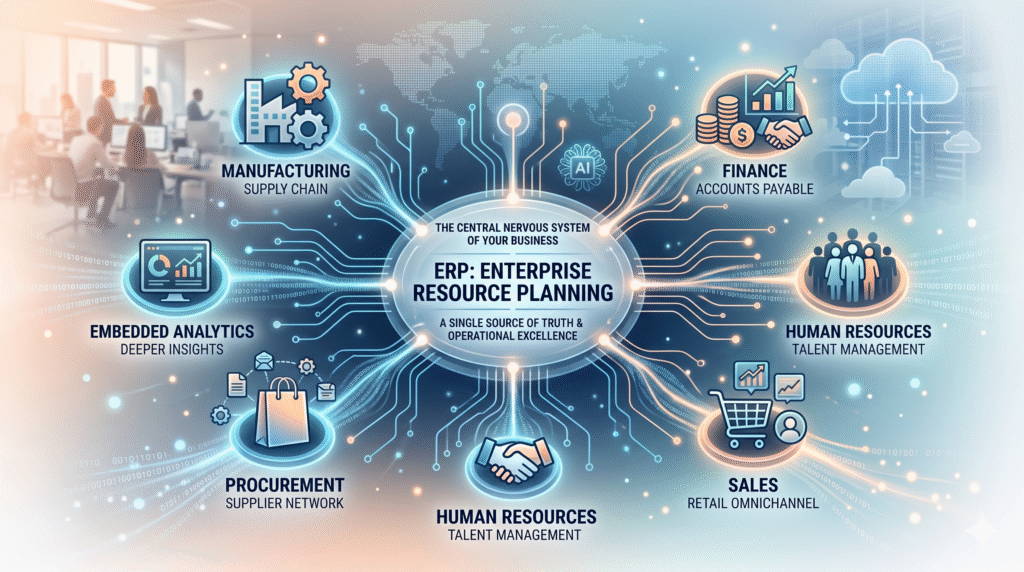
Enterprise Resource Planning, commonly referred to as ERP, represents the sophisticated architectural backbone of a modern organization. It is an integrated suite of software applications designed to harmonize and automate the essential functions of a business. At its most fundamental level, an ERP system functions as a centralized repository that captures data from various departments—such as Finance, Human Resources, Manufacturing, Supply Chain, Sales, and Procurement—and synthesizes it into a unified, real-time view of company-wide activity. By providing this “single source of truth,” an ERP ensures that every stakeholder, from the warehouse floor to the executive boardroom, is operating with the same information, thereby eliminating the fragmentation that typically plagues growing enterprises.
To truly grasp the essence of Enterprise Resource Planning, it is helpful to conceptualize an organization as a living biological entity. Much like a human body relies on vital organs to perform specific tasks such as respiration or digestion, a business relies on core processes like Supply Chain Management and Sales Operations. While these processes might appear to function independently, they are deeply interconnected; a failure in the “respiratory system” of a supply chain will inevitably starve the “muscular system” of sales. In this analogy, the ERP software serves as the central nervous system. It facilitates the instantaneous transmission of signals and data between these disparate parts, ensuring the entire “body” of the business functions with coordination, efficiency, and health
The Historical Evolution and Technological Advancement of ERP
The journey of ERP is a century-long narrative of shifting from manual labor to Artificial Intelligence. The concept originated in the early 20th century with paper-based manufacturing systems focused primarily on production scheduling. By the 1960s, the dawn of the computing era allowed manufacturing firms to adopt the first computerized business applications. While these were revolutionary for their time, they were prohibitively expensive, slow, and focused on very narrow tasks. These early tools eventually evolved into specialized solutions like Material Requirements Planning (MRP) and sales order processing. Over time, software engineers found ways to bridge these silos, leading to the birth of the integrated ERP suites we recognized by the 1990s.
The subsequent decades brought about a radical transformation driven by the explosion of the internet. The shift from local server installations to browser-based interfaces paved the way for Cloud ERP, which democratized the technology by making it accessible to smaller businesses. Today, we have entered the era of Intelligent ERP. Modern systems are no longer just passive databases; they are infused with Generative AI and Machine Learning. These advanced systems utilize AI Agents to predict market fluctuations, automate repetitive administrative tasks, and provide prescriptive guidance to decision-makers, ensuring that the ERP is a proactive partner in business growth rather than just a record-keeping tool.
The Critical Importance of ERP in Modern Business
The strategic necessity of Enterprise Resource Planning cannot be overstated, as it serves as the foundational layer for all organizational data. When a company operates without an ERP, data becomes trapped in departmental silos, leading to contradictions and delays. In contrast, an ERP creates a cohesive ecosystem where Finance teams can close monthly books with speed and accuracy because they aren’t waiting on manual reports from other divisions. Similarly, Sales departments gain the ability to manage complex customer orders with full visibility into current inventory levels, while Logistics teams rely on the system’s data to ensure the right products reach the right customers at the right time.
Beyond internal operations, the ERP serves external stakeholders as well. Procurement professionals use the system to optimize supplier relationships and source goods at the best possible prices. Accounts Payable departments leverage integrated workflows to ensure suppliers are paid accurately and punctually, maintaining the company’s reputation. Furthermore, for Management, the system provides instant visibility into Key Performance Indicators (KPIs), allowing for agile decision-making. Even Banks and Shareholders depend on the integrity of an ERP, as it provides the transparent and reliable financial records necessary for audits, compliance, and investment confidence.
Industry-Specific Applications of ERP Systems
The versatility of Enterprise Resource Planning allows it to be tailored to the unique demands of various sectors. In the world of Manufacturing, whether dealing with discrete assembly or continuous process production, ERP is used to monitor asset utilization and control overtime costs. It provides end-to-end Inventory Control, allowing managers to identify underperforming product lines and streamline procurement. For Retailers, the ERP is the bridge between physical storefronts and digital e-commerce channels. It enables a seamless “omnichannel” experience where customer data, stock levels, and shipping status are synchronized, which directly results in fewer abandoned shopping carts and higher conversion rates on websites.
In Service-Centric Companies, such as legal, engineering, or accounting firms, the focus shifts to Resource Utilization and project profitability. These organizations use Mobile ERP technology to track billable hours and manage service delivery commitments in real-time. For Utility Companies, the system is vital for managing massive capital assets and forecasting the need for spare parts. An ERP prevents the twin disasters of having too few parts during a power outage or carrying the excessive cost of obsolete inventory. Finally, Wholesalers and Distributors utilize ERP to reduce distribution costs and shorten the “order-to-cash” cycle, relying on automated logistics and integrated inventory management to stay competitive in a high-volume market.
How ERP Systems Function and Integrate
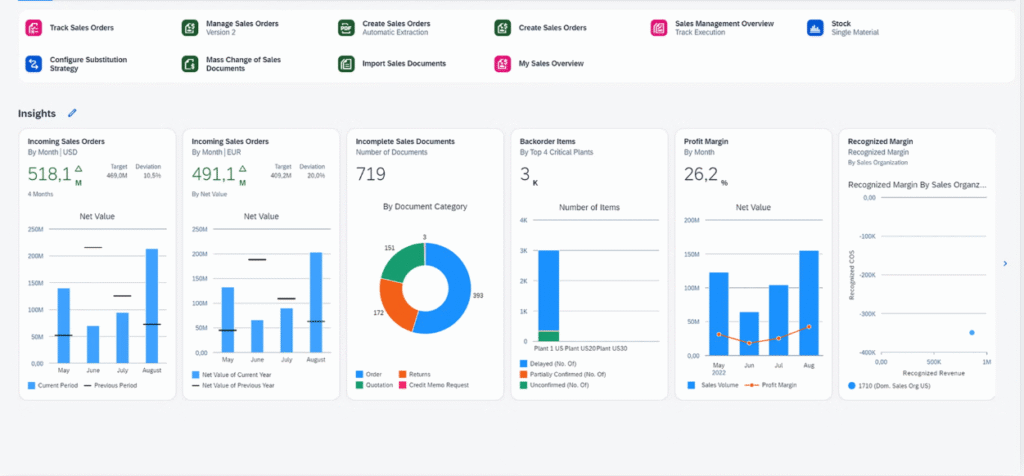
An ERP system is not a single, monolithic block of code but rather a collection of integrated Modules. Each module is a specialized application designed for a specific business function—like Human Capital Management (HCM) or Customer Relationship Management (CRM)—yet they all share a common, unified database. This architecture allows different departments to “talk” to one another. For instance, when a sales representative enters an order, the ERP automatically updates the inventory module, notifies the shipping department, and records the future revenue in the finance module. This interconnectivity ensures that data entered once is reflected everywhere, reducing human error and manual entry.
To remain effective in a complex digital landscape, ERP systems must also integrate with external data sources and third-party software. Modern systems use Application Programming Interfaces (APIs), Enterprise Service Bus (ESB), or Integration Platform-as-a-Service (iPaaS) to connect with specialized tools. This level of Integration creates a holistic view of the business, allowing for better collaboration between internal teams and external partners. The flexibility of these systems means that a company can start with a few core modules and scale their ERP capabilities as the business grows, adding new layers of functionality without having to replace the entire underlying infrastructure.
Understanding the Four Primary ERP Deployment Models
When an organization decides to implement an ERP, they must choose a deployment strategy that aligns with their technical capabilities and security needs. The most prevalent modern choice is Cloud ERP, where the software is hosted on the provider’s remote servers and accessed via the internet. This Software-as-a-Service (SaaS) model is popular because it requires lower upfront capital investment, offers rapid scalability, and shifts the burden of security and updates to the vendor. In contrast, On-Premises ERP involves installing the software on the company’s own local servers. This offers maximum control and customization, making it a preferred choice for industries with extremely stringent data sovereignty requirements, though it demands significant internal IT resources.
For companies in transition or those with complex structures, two other models exist. A Two-Tier ERP strategy is often used by large corporations that have a primary, robust system at headquarters (Tier 1) while using smaller, more agile systems at various subsidiaries or regional offices (Tier 2). This allows for local flexibility while maintaining corporate oversight. Finally, the Hybrid ERP model combines elements of both on-premises and cloud deployments. A business might keep its sensitive financial data on a local server while using a cloud-based module for its sales team’s mobile access. This “best of both worlds” approach provides the necessary agility to meet modern business demands while respecting legacy constraints or specific regulatory hurdles.
The Core Benefits of Implementing an ERP System
The primary motivation for adopting Enterprise Resource Planning is the pursuit of operational excellence. One of the most immediate benefits is Higher Productivity, achieved through the automation of routine tasks which frees employees to focus on value-added activities. By breaking down Information Silos, an ERP provides Deeper Insights, giving leadership the ability to see the “big picture” and answer critical questions about performance instantly. This leads to Accelerated Reporting, where financial and operational results are generated in real-time rather than weeks after the period ends, allowing the company to pivot quickly in response to market changes.
Furthermore, an ERP is a powerful tool for Risk Management. By centralizing data and standardizing workflows, companies can ensure better compliance with international regulations and predict potential disruptions before they occur. From an IT perspective, ERP offers Simpler IT management; instead of maintaining dozens of separate, uncooperative software tools, the IT department manages a single, integrated platform with a consistent user interface. Ultimately, these factors culminate in Improved Agility. An organization powered by an ERP can identify new opportunities faster and execute its strategy with a level of precision that is impossible with manual or fragmented systems.
Identifying the Readiness for an ERP Transition
Many growing businesses reach a “tipping point” where their existing tools—often a combination of basic accounting software and manual spreadsheets—no longer suffice. One major red flag is when Day-to-Day Tasks begin to consume an inordinate amount of time; if closing the monthly books requires days of manual data reconciliation, the current system is failing. Another sign is the Difficulty Accessing Critical Data. If a manager cannot instantly determine the profit margin on a specific product line or the current status of a customer return, the lack of integrated metrics is hindering the company’s ability to compete.
Operational friction is another clear indicator of ERP readiness. When business processes become “runaway”—meaning inventory is frequently inaccurate, or customer satisfaction is dropping due to shipping errors—it is a sign that the current infrastructure cannot handle the company’s volume. This is often caused by a Lack of Standardized Processes, where different departments use different methods to record the same event, leading to Duplicate Data Sets and confusion. When a business finds itself missing out on growth opportunities because the staff is too busy “fighting fires” and managing manual paperwork, it is a definitive signal that the organization needs the automation and intelligence of a modern ERP system.
Ten Essential Features of a High-Performing ERP
When evaluating an ERP solution, there are ten pillars of functionality that define a high-quality system. First and foremost is a Common Database, which serves as the foundation for all modules. This must be accompanied by Embedded Analytics and Data Visualization tools, such as interactive dashboards and KPIs, which transform raw data into actionable intelligence. To keep pace with modern efficiency requirements, the system must offer Automation powered by Machine Learning to handle repetitive workflows. A Consistent UI/UX is also vital, ensuring that the software is intuitive and easy for employees, suppliers, and customers to navigate across all modules.
The remaining features focus on connectivity and future-proofing. Seamless Integration capabilities are non-negotiable, allowing the ERP to connect with external apps and third-party data. The system should embrace New Technologies, including Generative AI, IoT connectivity, and robust mobile support. A stable Technology Platform—often featuring Low-Code/No-Code tools—is necessary to ensure the system can be customized without deep programming knowledge. For businesses with global ambitions, Multinational Support for various languages, currencies, and local tax laws is essential. Finally, the vendor must offer a Choice of Deployment, giving the business the flexibility to host the system in the manner that best suits their operational needs.
ERP Scaling: Solutions for Small, Midmarket, and Large Enterprises
The beauty of modern Enterprise Resource Planning is that it is no longer exclusive to massive corporations; it is designed to be scalable. Small Business ERP tools are often cloud-native and designed for rapid deployment. These systems help small firms transition away from spreadsheets, offering basic but powerful modules for financials and sales that can grow as the company expands. Midmarket ERP solutions are built for growing companies that require more sophisticated analytics and “best-practice” templates for their business processes. These modular systems allow mid-sized firms to compete with larger rivals by optimizing their limited resources through high-level automation.
For the global giants, Enterprise ERP provides the robust infrastructure necessary to manage complex, multi-country operations. These systems are heavily infused with Artificial Intelligence and Predictive Analytics to help leaders transform entire business models. Whether deployed in the cloud, on-premises, or through a hybrid approach, these enterprise-grade systems are capable of processing massive volumes of data and supporting thousands of users simultaneously. Regardless of the size of the company, the goal remains the same: to create a lean, data-driven organization that is capable of navigating the complexities of the modern global economy.
Future Horizons: Trends Reshaping the ERP Landscape
As we look toward the future, the evolution of ERP is accelerating. The most significant trend is the deep embedding of Generative AI. This technology allows users to interact with their ERP using Natural Language Commands, making data retrieval as simple as asking a question. Beyond simple queries, AI can now suggest optimizations for supply chains or draft financial reports automatically. Another major shift is toward Vertical Integration. Instead of generic software, businesses are demanding ERP systems with industry-specific extensions that provide “out-of-the-box” functionality for niche sectors like biotech or aerospace, reducing the need for costly custom coding.
The momentum toward Cloud-First strategies continues to intensify, as the cloud provides the most secure and accessible environment for high-speed business operations. Finally, there is a massive push toward User Personalization. Modern workers expect their business software to be as user-friendly and customizable as their personal apps. Through Low-Code Platforms, employees can now create their own custom dashboards and automated workflows without needing an IT degree. This democratization of technology ensures that the ERP is not just a corporate requirement, but a personal productivity tool that empowers every individual within the organization to contribute to the company’s success.